I work with actors at every stage of their careers, and many still get confused about the difference between commercial and theatrical headshots.
New actors may not know why they need separate photos at all. More experienced actors may understand the basic distinction but still wonder whether one versatile headshot can cover both categories.
There are many differences between these two types of headshots, but sometimes it is easier to show rather than tell. I’m going to demonstrate the difference using the same actor in the same exact outfit, photographed once for commercial submissions and once for theatrical submissions.
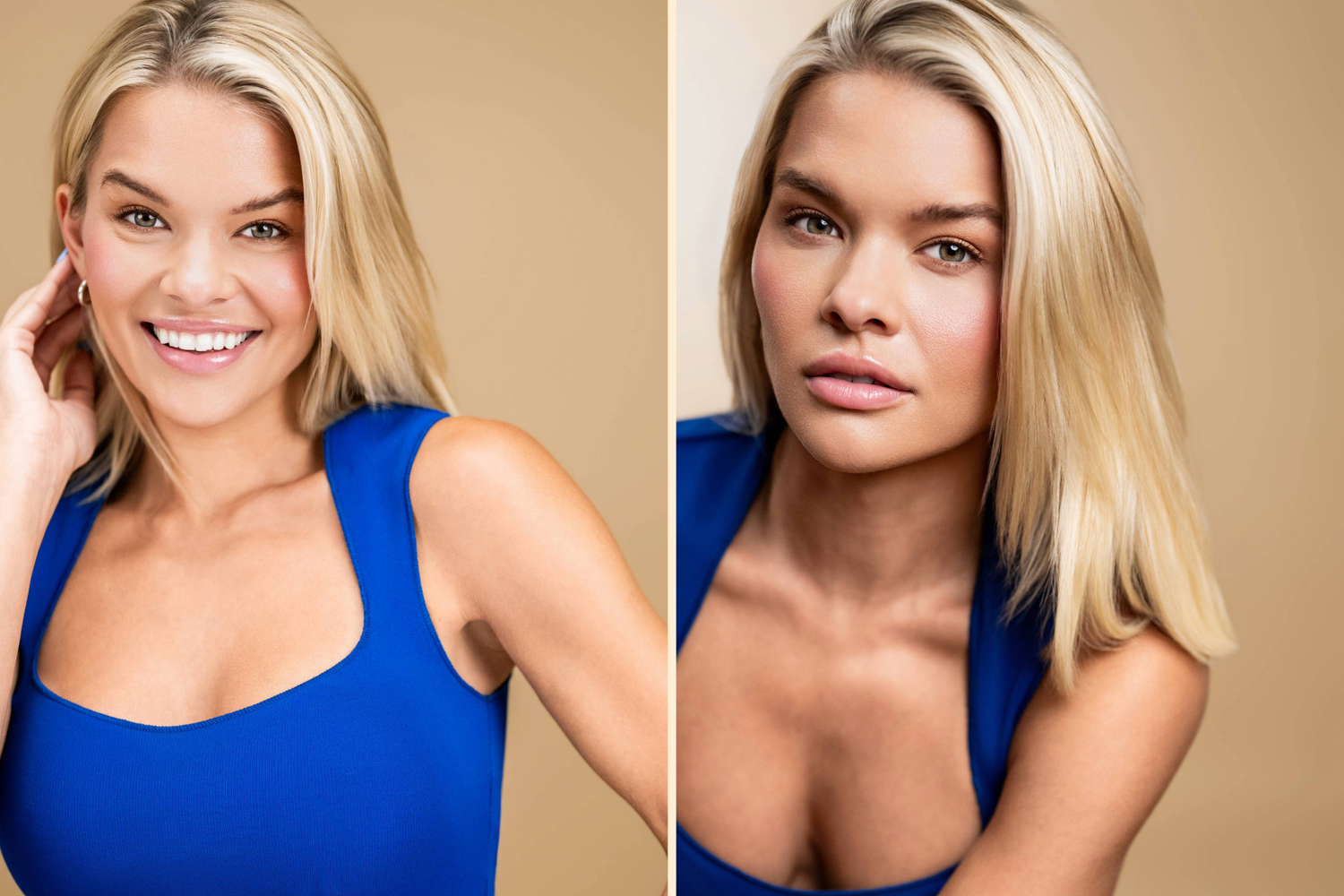
These two images were taken during the same headshot session. She is wearing the same look against the same background, but the expression, energy, composition and lighting all shift based on what each image needs to accomplish.
One feels open, positive and immediately approachable. The other feels more grounded, complex and intriguing.
Before we break down the two photos, let’s clarify what commercial and theatrical headshots are meant to do.
What Is the Difference Between Commercial and Theatrical Headshots?
Commercial headshots are used when actors submit for online advertisements, traditional television commercials or any job where they are selling something to an audience.
Because commercial casting involves representing a company, product or service, the headshot should communicate qualities such as warmth, trustworthiness, relatability and positive energy. Casting should be able to look at the image and quickly imagine that actor in an advertisement.
Despite the name, “theatrical” does not only mean theater. Theatrical headshots are used for television and film submissions.
These images should convey more emotional depth and character specificity. Instead of primarily asking whether the actor feels friendly and approachable, the image should suggest a more complex personality, an internal life or a particular type of role.
For a more complete explanation, read What’s the Difference Between Commercial and Theatrical Headshots?
Why One Headshot Should Not Try to Do Both Jobs
It can be tempting to choose one headshot that feels flexible enough to use for everything.
The problem is that when a photo does not lean clearly commercial or theatrical, it often ends up communicating very little.
An image that sits halfway between bright and approachable and grounded and dramatic is confusing. Casting is left without a strong sense of where the actor fits or what kind of energy they are bringing to the submission.
A commercial headshot should show that you can connect with an audience and represent a brand. A theatrical headshot should help casting imagine you in a television or film role.
Trying to make one photo accomplish both goals can weaken its effectiveness in either category.
That is why actors should have dedicated options for both types of submissions rather than relying on one catch-all image.
You can read more about that in Do You Need Both Commercial and Theatrical Headshots in Los Angeles?
Breaking Down the Commercial Headshot

In the commercial image, her energy is bright, open and immediately engaging.
Her smile creates a clear sense of warmth and positivity. The hand near her face adds movement and gives the image a relaxed, personable quality rather than making it feel stiff or overly posed.
Her posture also feels active and confident. There is an ease to the image that makes it easy to imagine her in an advertisement, whether she is representing a beauty brand, lifestyle product, fitness company or luxury car.
The wider framing allows more of her body language to contribute to the photograph. It gives the image energy and communicates her personality before casting knows anything else about her.
The lighting supports that commercial direction as well.
Her face is evenly and clearly illuminated, with soft shadows and no heavy dramatic contrast. The photograph feels bright and polished without looking flat.
Lighting plays a major role in the mood of any portrait. Adobe explains that high-key lighting creates a brightly lit subject with softer shadows, a style often used in commercial imagery.
For this commercial headshot, the softer, more open lighting reinforces the positive and accessible energy already coming through in her expression and body language.
Breaking Down the Theatrical Headshot

The theatrical image uses the same actor, outfit and background, but the entire feeling of the photograph changes.
Her expression is quieter and more grounded. Instead of offering an immediate smile, she gives the camera a direct and more searching look.
There is more stillness in her body language, and the tighter composition brings greater attention to her eyes and expression. The image feels less like she is presenting herself to the viewer and more like we are catching a glimpse of an internal thought or story.
That shift makes the photograph better suited to television and film submissions, where casting may be looking for greater complexity, specificity or emotional depth.
The lighting is also more dramatic.
There is more shape across her face, more visible shadow and a stronger contrast between the illuminated and darker areas of the image. That contrast adds dimension and supports the grounded, intriguing quality of the portrait.
The goal is to give casting something more layered to respond to and to help them imagine the actor inhabiting a role rather than simply presenting a friendly public-facing version of themselves.
Now That You See the Difference
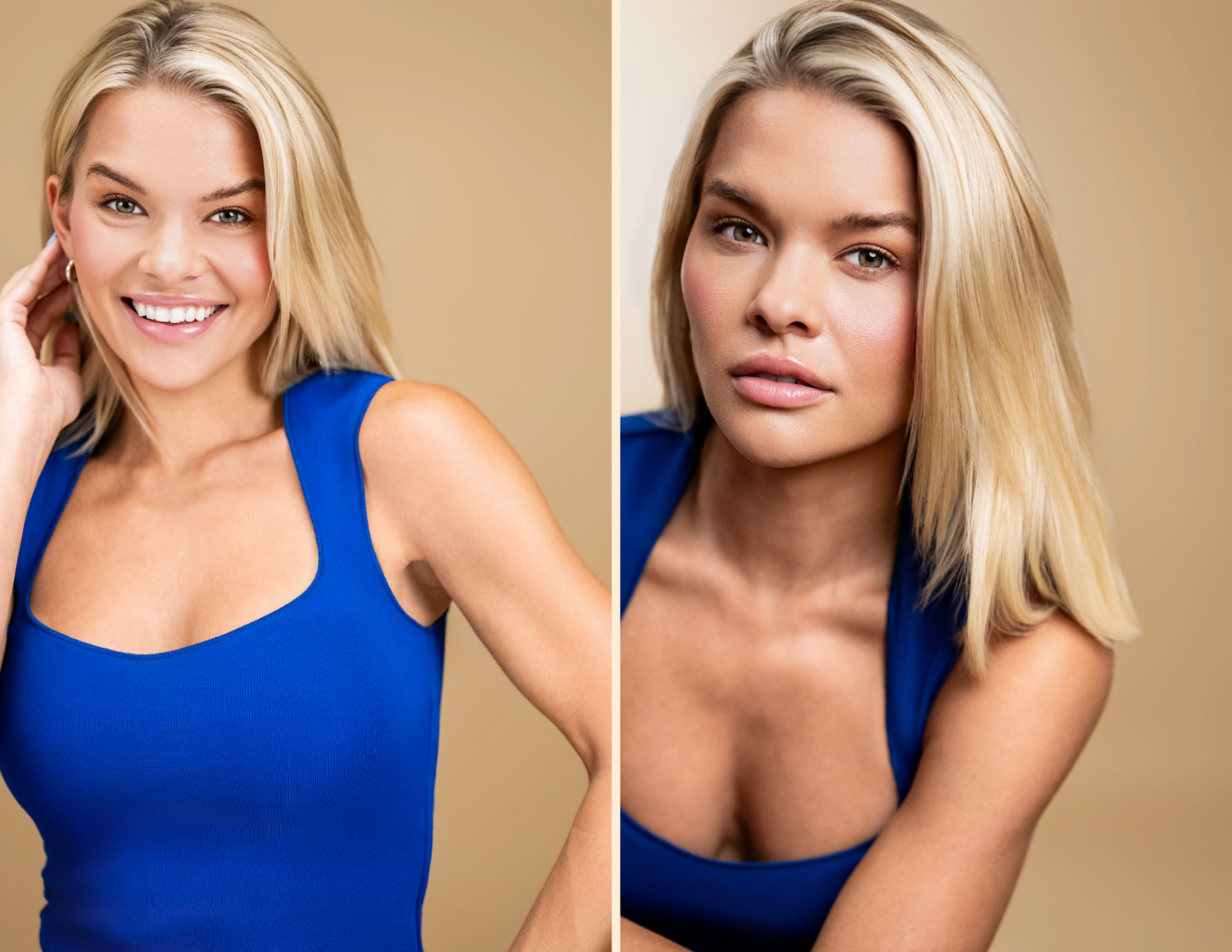
When these two images are viewed side by side, it becomes much easier to understand why commercial and theatrical headshots serve different purposes.
The wardrobe did not change. The actor did not change. Even the background remained the same.
What changed was the intention behind the photograph.
The commercial image uses an open expression, positive energy, active body language and softer lighting to create warmth and approachability.
The theatrical image uses greater stillness, a more grounded expression, tighter framing and more dramatic lighting to create depth and intrigue.
That is also why it is important to tell your photographer whether a look is intended for commercial or theatrical submissions.
A strong actor headshot photographer should not simply photograph you generally and leave you to decide what each image might be used for afterward. They should adjust their direction, composition, lighting and approach to make sure the photograph is clearly landing in the right lane.